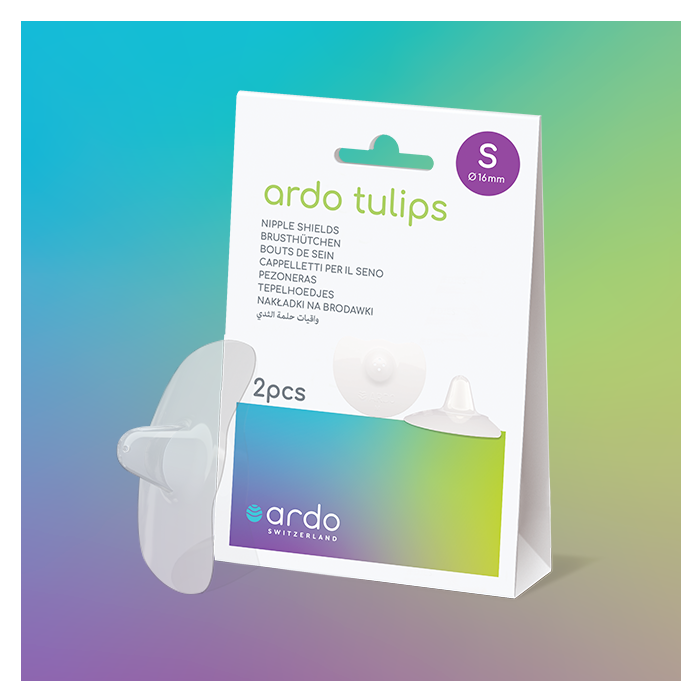
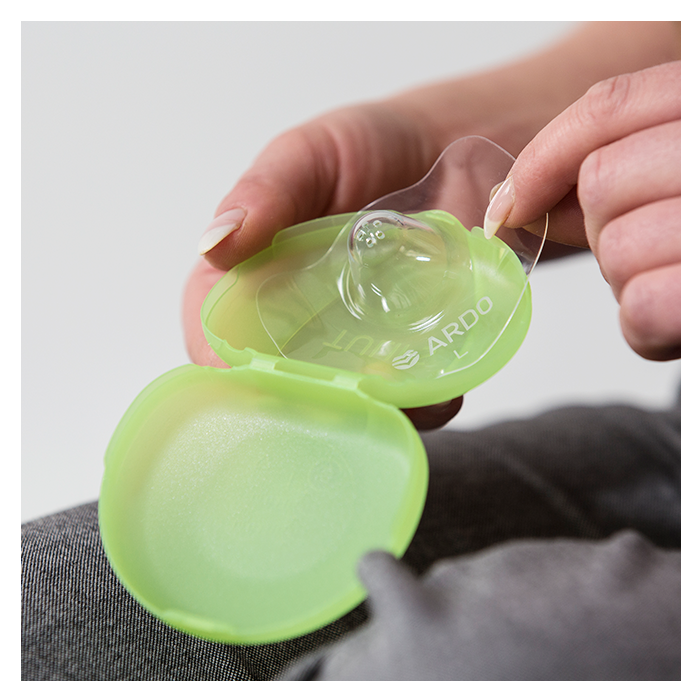
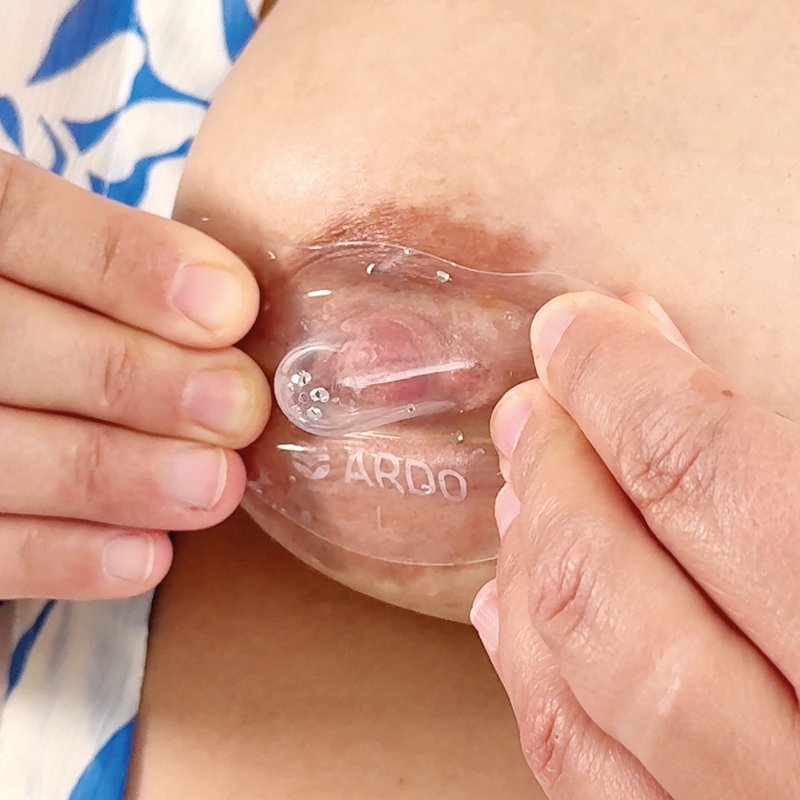
Ardo Tulips nipple shields support latching on the breast, provide relief for sensitive or sore nipples and may promote the baby’s natural sucking reflex.
Their carefully considered design also allows maximum skin contact between mother and child to maintain closeness and bonding.
Questions about using nipple shields
When can I use a nipple shield?
+
-
Nipple shields are not a universal solution to all breastfeeding difficulties. However, in certain situations, they may make breastfeeding easier or even make it possible where it was not before. They should be used only as much as necessary and under the guidance of a professional, while seeking clarification of the reason for breastfeeding difficulties.
Possible indications:
- Flat or inverted nipples
- Sore or painful nipples
- High milk flow
- Premature birth
- Weak sucking and drinking action
- Difficulty with latching on
- Transitioning from bottle to breast
- Delayed development of an effective sucking action
How do I find the right size?
+
-
The right size is important to ensure comfort and effectiveness. The size depends first of all on the nipple diameter and also the size of the baby’s mouth.
Size S – for nipples up to 12 mm diameter
Made from ultra-soft silicone for very small and premature babies with a sensitive oral cavity.
Size M – for nipples up to 16 mm diameter
With four holes for a lower flow rate – facilitates sucking at the breast for full term-babies with a small mouth and premature babies.
Size L – for nipples over 17 mm diameter
With five holes for normal-weight and full-term babies.
Free size template
Simply download and print out to determine the right nipple shield size.
How long should I use nipple shields for and when should I stop?
+
-
Nipple shields are intended as a temporary aid rather than a permanent solution. The length of time they are used depends on an individual’s needs and the breastfeeding situation.
In many cases, nipple shields are only used for a transitional period – such as in the first few days or weeks after birth – until the baby can effectively latch on the breast.
It is important to check regularly whether it is already possible to breastfeed without a nipple shield. Ideally, the mother is supervised by a midwife or lactation consultant.
Are there any side effects or risks with use?
+
-
The use of nipple shields may have the following effects:
- The breast may be less effectively stimulated, which may impair lactation
- The baby may become reluctant to latch on without the nipple shield, which may make it more difficult to feed directly from the breast
- If the size is incorrect, the baby may be uncomfortable during feeding or the nipple may be bruised
- In rare cases, milk flow may become less efficient
These effects may not necessarily occur, but should be kept in mind during use.
How can I reduce these risks?
+
-
The risks can generally be reduced effectively if nipple shields are used only when necessary and under supervision.
Some helpful tips:
- Only use with a clear indication and in consultation with a professional if possible
- Regularly practise latching on without a nipple shield as soon as it is possible to do so
- Express milk alongside feeding in order to promote lactation
- Make sure the shield is the correct size and fit
- Monitor the baby’s weight development and seek guidance in the case of uncertainty
The aim is always to gradually return to breastfeeding without an aid.